
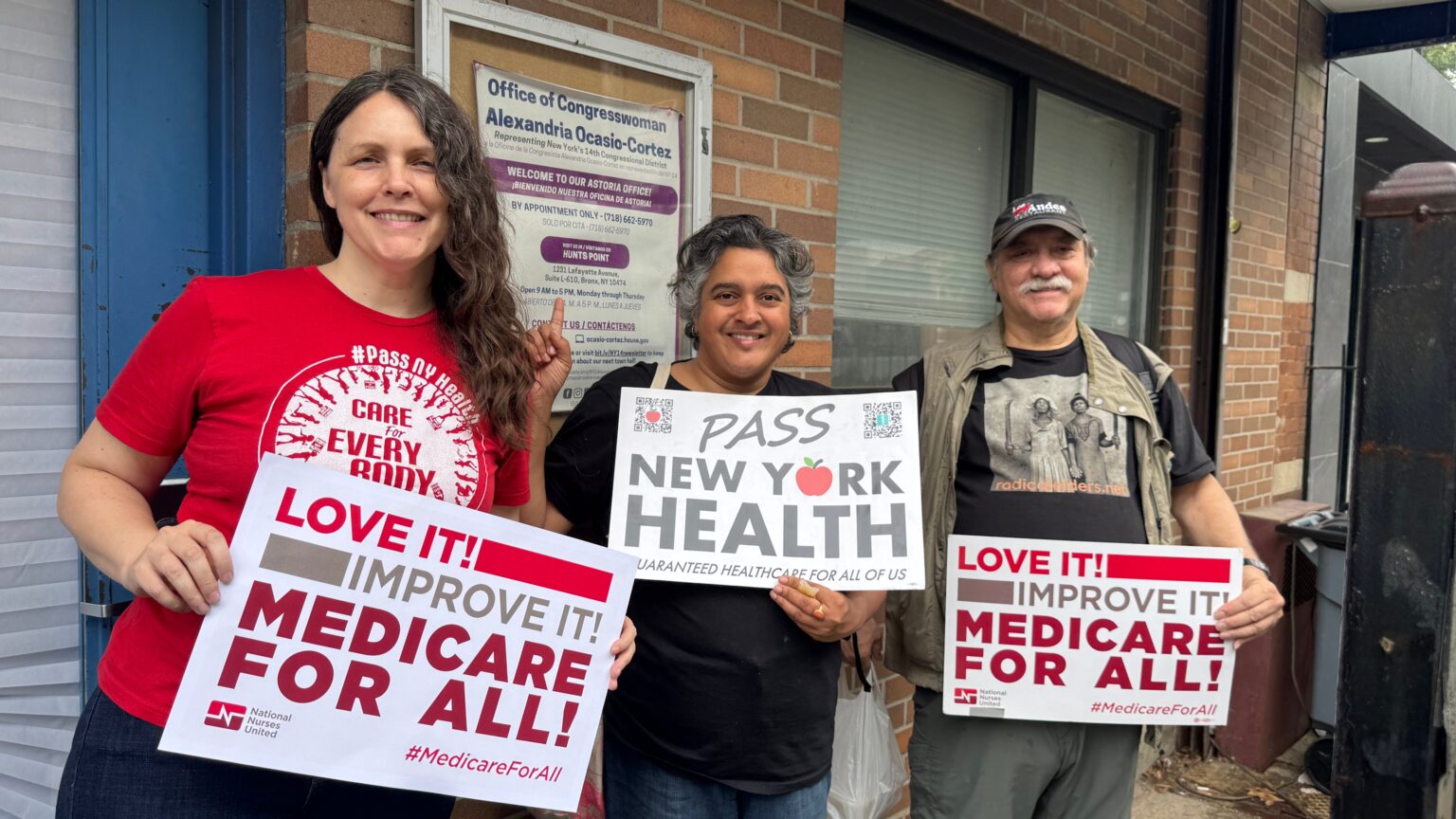
NEW YORK CITY — Patients, union members and health workers gathered in New York City this morning from 10 a.m. to 11 a.m. to mark the 61st anniversary of Medicare and Medicaid. The event featured personal stories about gaps in the current healthcare system and calls for lawmakers to protect and expand both programs.
Speakers pressed Congress and state lawmakers to pass Medicare for All and the New York Health Act. Organizers said the goal is comprehensive healthcare coverage for all New Yorkers.
The rally comes a year after Congress passed a large tax cut bill, known as HR1, which organizers say cut funding for Medicare, Medicaid and the Affordable Care Act. They argue the cuts have caused millions of people nationwide to lose health coverage and have placed financial strain on hospitals and clinics.
Speakers Detail Impact of Coverage Losses
Nancy Hagans, a registered nurse, said Medicare and Medicaid have saved millions of lives and need full funding. She called for long-term solutions such as the New York Health Act and Medicare for All to guarantee healthcare as a human right.
State Senator Gustavo Rivera said federal budget cuts have already left 450,000 New Yorkers without adequate or affordable coverage. He said lawmakers need to restore basic coverage when the legislature returns to Albany and eventually pass the New York Health Act.
Angel Roman of Radical Elders said Medicare and Medicaid came from decades of organizing and that the group continues to push for universal healthcare. He said elders are experiencing the effects of current cuts and privatization efforts directly.
Dr. Roona Ray of Physicians for a National Health Program – NY Metro said hundreds of thousands of New Yorkers lost coverage this month, with as many as 1.5 million more projected to lose insurance over the next year. She said patients increasingly cannot afford appointments or prescribed treatments.
Mark Hannay, director of Metro New York Health Care for All, called Medicare and Medicaid two of the most successful and popular government programs in the country’s history. He said his organization will work to reverse recent funding cuts and push for broader healthcare reform in the next Congress.
Advocates Cite Racial and Economic Justice, Disability Rights
Anthony Feliciano of Housing Works said Medicaid has helped reduce poverty and improve health outcomes, calling it a key tool for racial and economic justice. He said New York needs to expand access to care as federal threats to coverage grow.
Sharon McLennon Wier of the Center for Independence of the Disabled, New York, said people with disabilities depend on Medicaid to avoid institutionalization and maintain quality of life. She said further cuts would put that population at serious risk.
Evan Woo, a medical student with New York City Against Segregated Healthcare, said patients often suffer due to where they live, what insurance they carry and how much they earn rather than due to failures of medicine itself.
Christina Sparrock of See the Person Inc. and Health Justice for New York shared a personal account of being denied coverage for medication and facing an $800 bill for a prescription used to manage her mental health. She linked the national mental health crisis to housing costs, displacement, low wages, gun violence and other systemic pressures.
Maria Alvarez, executive director of the NY StateWide Senior Action Council, said Medicare was created to prevent older Americans from sliding into poverty and bankruptcy. She said lawmakers need to uphold that promise as the senior population continues to grow.
Alyce Wittenstein of Queens Says No Kings and NYC Council Member Christopher Marte also spoke at the event. Marte said the country should prioritize universal healthcare funding over military spending and immigration enforcement.
Broad Coalition Backs Push for Expanded Coverage
The rally was hosted by Metro New York Health Care for All and Physicians for a National Health Program – New York Metro. More than two dozen organizations took part, including the New York State Nurses Association, Housing Works, Make the Road NY, the Campaign for New York Health and the NYC DSA Healthcare Working Group, among others.
Organizers said they plan to keep pressing state and federal lawmakers to reverse recent healthcare funding cuts and to advance broader reform proposals in the next legislative session.